First aid
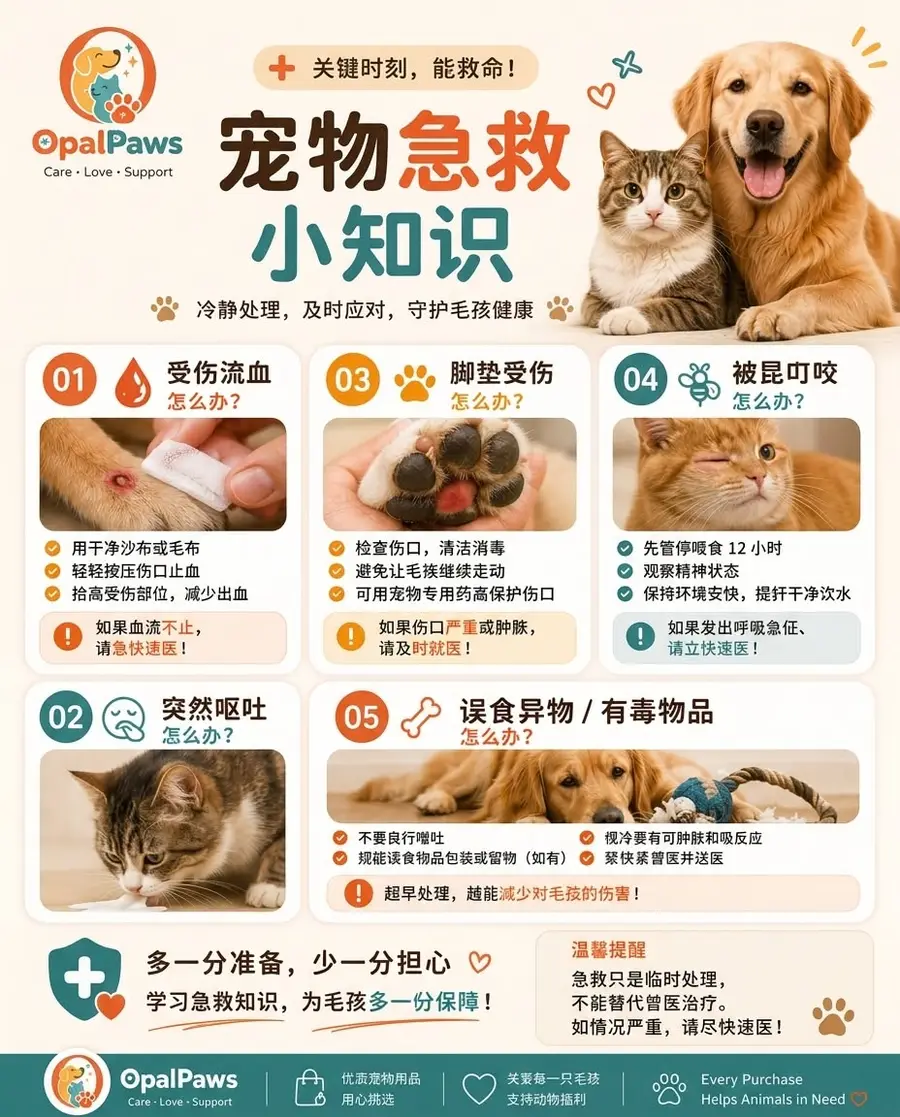
Five first-aid basics for pet owners
When something suddenly goes wrong, staying calm and doing the right thing first gives your pet an extra layer of protection. Remember: first aid is only a stopgap. It never replaces a vet.
1. Bleeding
- Press gently on the wound with clean gauze or a towel.
- If you can, raise the injured part a little.
- If the bleeding won't stop, go to the vet.
2. Sudden vomiting
- Hold off food for 12 hours and watch how alert your pet is.
- Keep them somewhere quiet with clean drinking water.
- If the vomiting continues, comes with diarrhoea, or your pet seems very low, see a vet soon.
3. Injured paw pad
- Check and clean the wound.
- Keep your pet from walking on it; a pet-safe ointment can protect it.
- If the wound is deep or swollen, see a vet.
4. Insect bites and stings
- Remove the sting if there is one, then clean the area. A cold compress helps with swelling.
- Watch for spreading swelling, trouble breathing or vomiting.
- If breathing gets fast or the swelling spreads, go to the vet now.
5. Swallowed something harmful
- Don't try to make your pet vomit.
- Keep the packaging or what's left of the item for the vet.
- Call a vet and get there quickly. The sooner, the less harm.
This is general pet-care information, not a diagnosis. If your pet is in trouble, contact a vet as soon as you can.